DigitalOcean announced Agent Droplets on October 1, 2026: a single monthly subscription that bundles everything an AI agent needs — compute, inference, memory, storage, and governed access to 16,000+ tools — starting at $50/month. If you self-host n8n, the obvious question is: should you move your agents over, or keep the droplet you already babysit?
Short answer: Agent Droplets wins on “running by tonight,” self-hosted n8n wins on control and portability. The $50 plan is genuinely simple pricing for a managed agent stack; it does not replace what n8n is good at — deep app integrations and workflows you own. Below is the full head-to-head so you can decide for your own use case.
What Agent Droplets actually is
Agent Droplets build on DigitalOcean Managed Agents (public preview since September 22, 2026), which gave builders a managed runtime, governed access to 16,000+ tools, serverless inference, and persistent agent memory and storage. Agent Droplets wrap all of that into one subscription so you stop assembling — and separately billing — a compute VM, a model API account, a memory store, and a tool harness.
The pricing page (as of October 2, 2026) lists three tiers:
- Free Trial — $5 credit, new customers only
- Pro — $50/month — 15% discount on agent usage of inference, memory, session storage
- Team — $200/month — 20% discount on the same resources
Every paid tier includes: dedicated microVMs that start in about a second and pause when idle, governed access to 16,000+ tools (code interpreter, browser automation, web search, web fetch), unlimited agents, unlimited seats, and enterprise IAM — single sign-on, MFA, role-based access, audit logs, cloud firewalls, DDoS protection.
Two details that matter for builders:
- Inference covers models hosted on DigitalOcean — the pricing page names Kimi K3, GLM 5.3, and Typesafe Jev. Frontier models like Claude and GPT are available, but pay-as-you-go at list price — no discount, and they are explicitly excluded from the plan’s usage discount.
- You control the spend ceiling. Agent Droplets let you choose whether spending stops once the plan allowance is exhausted or continues at standard list prices. That is a real answer to the “my agent spent $400 overnight” fear — though it only caps the DO-billed portion, not your external API keys.
DigitalOcean’s CPTO Vinay Kumar framed it as a repeat of the original Droplet moment: “Fourteen years ago a Droplet made the cloud something one developer could understand and afford… Agents should feel like that. An Agent Droplet is one subscription for everything an agent needs.”
How we compared
Method, stated plainly: this is a specification comparison from primary sources (the October 1 BusinessWire announcement and DigitalOcean’s Agent Droplets pricing page), not a hands-on benchmark — the product launched yesterday, so nobody outside early access has production mileage yet. The n8n side uses long-standing, stable facts: self-hosted n8n Community Edition is free software; you pay for the server and your own model API keys, and you own the ops.
Excluded: n8n Cloud pricing (it changes; check n8n.io), and any claim about agent quality on either platform — that needs real workloads, which we will test when access opens up.
Head-to-head: Agent Droplets Pro ($50/mo) vs self-hosted n8n
| Criteria | Agent Droplets Pro ($50/mo) | Self-hosted n8n |
|---|---|---|
| Platform cost | $50/mo, usage discounts 15% included | ~$6–12/mo for a basic cloud VM; software is free |
| Inference / models | DO-hosted models (Kimi K3, GLM 5.3, Typesafe Jev) with 15% discount; Claude/GPT pay-as-you-go at list price | Bring your own keys to any model (Claude, GPT, Gemini, local Ollama) — you pay API rates, nothing else |
| Tool access | 16,000+ governed tools (code interpreter, browser automation, web search, web fetch) | 400+ built-in nodes + MCP servers + community nodes; deep app integrations (CRMs, sheets, databases) |
| Agent memory | Persistent agent memory + session storage included | You configure it: static data, Postgres, or external memory stores |
| Ops burden | Zero — managed runtime, isolated execution environments | You patch, back up, and scale (queue mode needs Redis + workers) |
| Governance | SSO, MFA, RBAC, audit logs included on all tiers | Basic auth by default; serious RBAC/SSO means config work or enterprise tiers |
| Workflow portability | Agents live in DigitalOcean’s platform | Workflows export as JSON — run them anywhere, including a different cloud tomorrow |
| Spend control | Built-in: stop at allowance or continue at list prices | Your own monitoring and API key limits |
| Seats / agents | Unlimited agents, unlimited seats | Unlimited workflows; user management depends on your setup |
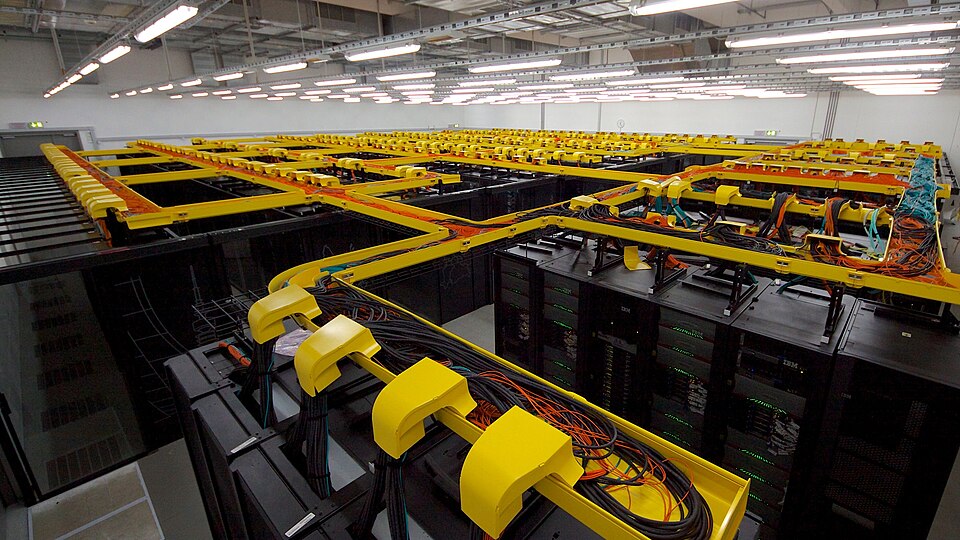 Managed agent platforms hide this: the servers, patching, and scaling you stop thinking about at $50/month.
When to pick Agent Droplets
- You want an agent running tonight with one predictable bill. The whole pitch is “pick a size and start” — no VM sizing, no Postgres container, no key-by-key wiring of a memory store.
- You are a solo dev or small team with no ops time. Patching n8n, rotating credentials, and keeping queue-mode workers healthy is real weekly work. $50 buys that back.
- Your agent’s job is inference + tools + memory, not orchestrating 30 SaaS apps. If the agent mostly reasons, searches, runs code, and remembers — the bundle fits.
- You are already on DigitalOcean. One bill, one dashboard, one IAM system.
When to pick self-hosted n8n
- You need deep app integrations. n8n’s 400+ nodes connect CRMs, spreadsheets, databases, and webhooks in ways a generic “16,000 tools” catalog may not match for your specific stack. An agent that acts inside your business systems usually lives in n8n.
- Frontier models are your primary drivers. If your agents run on Claude or GPT, Agent Droplets charges you list price anyway — self-hosted n8n plus your own API keys costs the same on tokens and far less on platform.
- You need workflow portability. n8n workflows are JSON files. You can export them, version them in git, and run them on any server. That is insurance no managed platform offers.
- Data must stay in your own VPC or under specific compliance rules. Self-hosting keeps the data plane yours.
Note: “Unlimited agents” and “unlimited seats” are pricing features, not architecture advice. Every agent still consumes inference and compute, and every seat with tool access is a security surface — the included SSO, MFA, and audit logs exist because of that, not in spite of it.
What we don’t know yet
Honest limits, since the product is one day old:
- No production mileage. Nobody has run a real workload through Agent Droplets long enough to report latency, reliability, or true monthly cost under load. The 15%/20% discounts only matter once you see the underlying usage rates.
- “16,000+ tools” needs scrutiny. Governed access is good (it is the difference between an agent that can act and one that acts safely), but tool count is a catalog metric. Quality, auth handling, and rate limits per tool are what determine whether your agent works.
- The frontier-model gap. If your stack is Claude/GPT-first, the headline $50 bundle covers everything except your biggest cost line. Run your token math before assuming the bundle is cheap.
- We did not test migration. Whether an existing n8n agent maps onto Managed Agents cleanly — triggers, webhooks, long-running workflows — is untested. Expect a rewrite, not a lift-and-shift.
Key Takeaways
- Agent Droplets is real simple pricing for a managed agent stack — $50/mo (Pro) or $200/mo (Team) for compute, inference, memory, storage, and 16,000+ governed tools, announced October 1, 2026.
- The discount only applies to DigitalOcean-hosted models (Kimi K3, GLM 5.3, Typesafe Jev). Claude and GPT are pay-as-you-go at list price — token-heavy frontier-model agents don’t get cheaper here.
- For n8n self-hosters, this is a “when” question, not an “if.” Pick Agent Droplets when you want zero ops and one bill; keep n8n when you need app integrations, workflow portability, or BYO-model economics.
- Spend caps are the sleeper feature. Choosing “stop at allowance” vs “continue at list prices” is the first sane answer to runaway agent bills — set it on day one.
- Wait for production reports before migrating anything critical. One-day-old platforms earn trust with uptime, not press releases.
Next: if you run n8n today, audit which of your workflows are really agents (reasoning + tools + memory) versus deterministic automation — only the former are even candidates for a platform like this. Our n8n queue mode guide covers what scaling self-hosted actually costs in ops terms.
FAQ
Is DigitalOcean Agent Droplets a replacement for n8n?
No. It is a managed runtime for AI agents — compute, inference, tools, memory in one subscription. n8n is a workflow automation platform with 400+ app integrations and portable workflow JSON. They overlap on “agents that do things,” but n8n covers deterministic multi-app automation that Agent Droplets isn’t designed for.
How much does Agent Droplets cost per month?
Pro is $50/month and Team is $200/month, each with a discount (15% and 20%) on agent usage of inference, memory, and session storage. A $5 free-trial credit is available to new DigitalOcean customers. Frontier models (Claude, GPT) bill pay-as-you-go at list price on top.
Can I use my own API keys with Agent Droplets?
The pricing page positions inference around DigitalOcean-hosted models, with frontier models available pay-as-you-go. Unlike self-hosted n8n, where you bring keys to any provider, expect the platform’s billing to sit between you and the model — check the docs for BYOK support before assuming it works like n8n credentials.
Should I migrate my self-hosted n8n to Agent Droplets?
Not yet, and probably not wholesale. Migrate nothing critical until there are production reports on reliability and true cost under load. A reasonable path: keep n8n for app-integration workflows, and trial one standalone agent (research, code tasks, web automation) on the $5 trial credit.
Sources: DigitalOcean press release via BusinessWire, October 1, 2026; DigitalOcean Agent Droplets pricing page (accessed October 2, 2026).
Image: Wikimedia Commons (SuperMUC, Leibniz Supercomputing Centre)