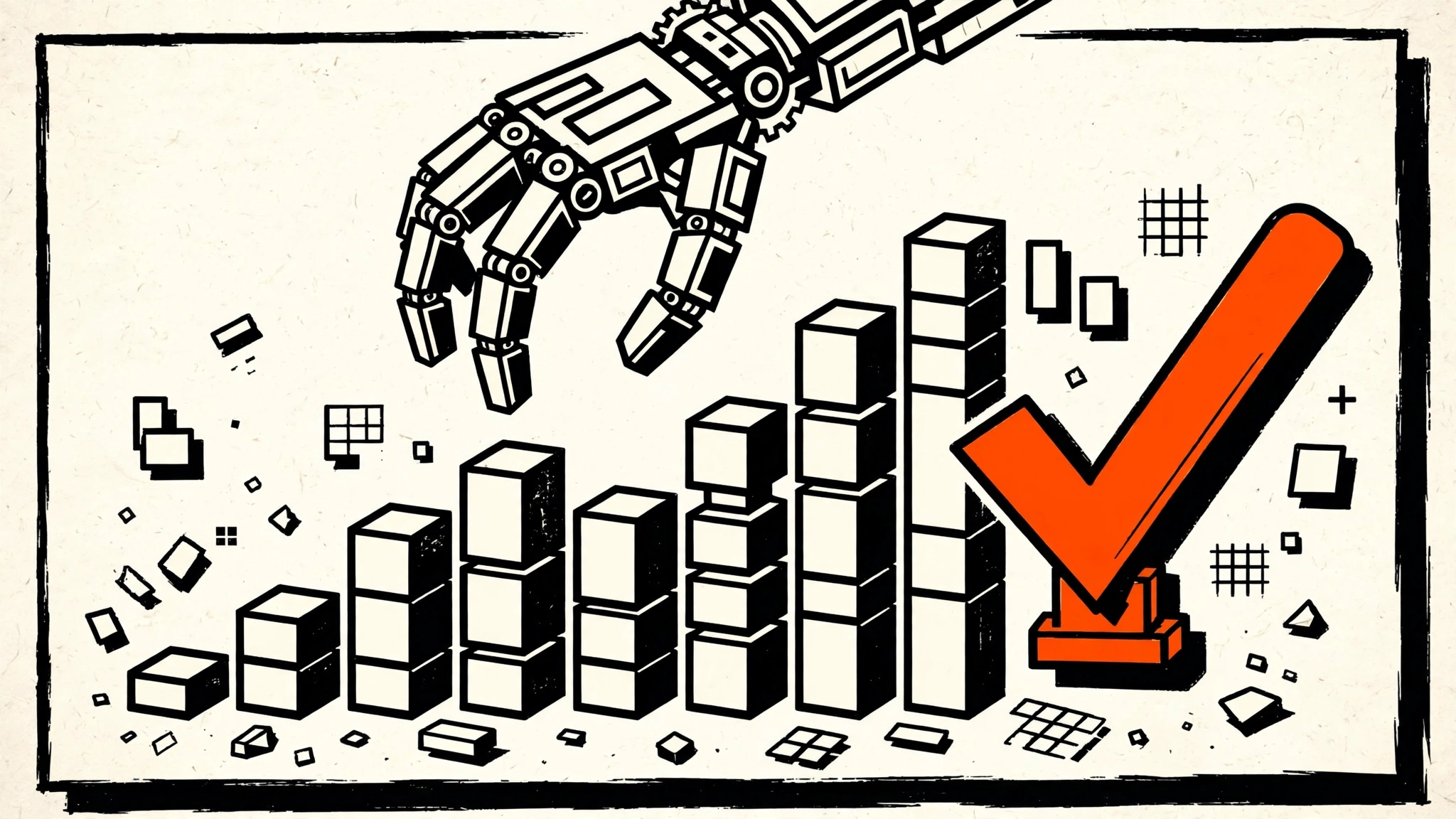
On September 29, Robinhood unveiled Robinhood Agents at its HOOD Summit in Houston: AI agents that live inside the Robinhood app and trade stocks for retail investors — with approvals turned on by default, and a toggle that turns them off. The moment matters because it’s the first time a mainstream brokerage has handed autonomous money-moving agents to tens of millions of non-technical users. If you build agents, the announcement is less a product launch and more a public blueprint for how human-in-the-loop becomes a product decision instead of a technical default.
What Robinhood actually announced
The key change from Robinhood’s earlier experiment is where the agent lives. In May, Robinhood launched Agentic Trading, which required customers to supply their own external AI agent and connect it to Robinhood’s servers with developer tools. Robinhood Agents need no linking or setup: the agent lives inside the main app. That matters because it puts agents in front of Robinhood’s full base — 28.6 million funded customers at the end of August, per the company’s September monthly operating data — instead of the developer audience the earlier version reached.
Setup is short: a customer names the agent, opens a separate agentic account, and picks an AI model. In the summit demo, users could choose OpenAI’s GPT-6 Luna or GPT-6 Sol, or Anthropic’s Opus 4.8, according to Fortune. Other models cost standard token rates; Luna is free through the end of the year.
Demand was already there before the simplification. Nearly 100,000 customers had opened agentic accounts by late July, holding more than $100 million in assets, per Robinhood’s July earnings materials. That passed 150,000 customers by late September, and Robinhood’s agents were already using the company’s tools almost 30 million times a day — unaudited figures, but the direction of travel is unmistakable.
To inform those trades, agents pull from dozens of market data sources plus the customer’s own portfolio. Optional Agent Apps add paid data from 11 providers — including Nasdaq, Unusual Whales, and Quiver Quantitative, which tracks congressional stock trades — priced at $5 to $30 a month after a one-month free trial.
A feature called Loops arrives next: it turns a strategy into a standing instruction that runs around the clock, like a morning market check that places a trade when set conditions are met. That’s the closest thing here to a traditional automation — a scheduled workflow with an agent as the decision layer.
The approval toggle, and who owns the risk
Here’s the part every agent builder should read carefully. Customers approve each order by default. They can also turn approvals off and let the agent act alone. So the system has three properties at once:
- Scoped spending. The agent can only spend the money in its own account — blast radius is bounded by design.
- Jurisdictional guardrails. Crypto trade approvals must stay on in California, Connecticut, and New York — hard constraints the user cannot toggle away.
- The customer owns everything. All risk for agent trades falls on the customer, Robinhood’s disclosures state, whether approvals are on or off. The company says it doesn’t supervise, monitor, or audit the agents.
Note: PYMNTS Intelligence found that among the heaviest AI users, 37% already rely on AI as their main tool for managing money. Robinhood is building for a habit that is already forming — which is exactly why the guardrail design matters more than the agent design.
There’s also an incentive layer worth noting honestly. Every trade — human or agent — feeds Robinhood’s largest revenue line: transaction-based revenue rose 44% to $776 million in Q2, about 59% of total net revenue, with options alone bringing in $342 million. More agent trades mean more revenue for the broker. That’s not a scandal; it’s the business model, and it explains why the approval-off toggle exists at all. As of this writing, Robinhood is the only brokerage offering agents built for non-technical users at scale — eToro, Public, and Coinbase let users connect their own agents through developer connections.
What this means if you build agents
The interesting question for automation builders isn’t whether Robinhood’s agents are good traders. It’s the approval architecture, which maps directly onto patterns you already use:
- Human-in-the-loop is a setting, not an architecture. In n8n terms, this is a Wait node / approval gate placed before the trade execution — except Robinhood exposes the gate itself as a user toggle. When you build approval flows (the same pattern appears in CortexFlow’s own AI Devotional Reels Factory template, where approval gates sit before publishing), decide explicitly whether the gate is removable and who removes it.
- Scope the blast radius in the product, not in the prompt. Robinhood bounds the agent to a separate account with its own funds. No system prompt can reliably do what a separate account does. If your agent spends money, moves data, or publishes publicly, give it its own sandboxed surface rather than asking the model nicely to stay inside the lines.
- Some guardrails must be non-toggleable. Crypto approvals staying on in three states is the pattern: legal or safety constraints hard-coded outside the user’s control. Know which of your agent’s rules are user preferences and which are non-negotiable — and make the difference visible.
- Disclosures are the real API contract. “We don’t supervise, monitor, or audit the agents” is doing heavy legal lifting. Whatever autonomy your agents get, the ownership of failure needs to be stated as plainly as Robinhood states it.
What I can’t verify from the announcement: how the agents actually perform (win rates, drawdowns), how the approval UI handles the flood of requests a day-trading agent would generate, and whether the “coming soon” rollout has a firm date. Robinhood said eligible U.S. customers only, with no firm launch date in the summit materials I saw. Treat the numbers above as reported by the company, not independently audited.
FAQ
Can Robinhood’s AI agents really trade without my approval?
Yes — with approvals on by default, you can toggle them off per the announcement. But the agent can only spend money in its own separate agentic account, and crypto approvals must stay on in California, Connecticut, and New York.
How much do Robinhood Agents cost?
The agent itself needs no extra subscription beyond your account. You pick an AI model — Luna is free through the end of 2026, other models cost standard token rates. Optional Agent Apps data add-ons run $5–30/month after a one-month free trial.
Who is responsible if a Robinhood agent makes a bad trade?
You are. Robinhood’s disclosures state all risk falls on the customer whether approvals are on or off, and the company says it doesn’t supervise, monitor, or audit the agents.
Is this the first brokerage to do this?
It’s the first at this scale for non-technical users, per Fortune. eToro, Public, and Coinbase support agents too, but through developer connections that require users to bring and wire up their own agents.
Key Takeaways
- Robinhood put autonomous trading agents inside its main app for 28.6 million customers — approvals on by default, toggleable off, coming soon to eligible U.S. customers.
- The guardrail design is the lesson: separate scoped accounts, non-toggleable constraints for regulated cases, and a plain-English risk disclosure — not vibes about “safe AI”.
- Human-in-the-loop should be an explicit product decision in every agent you build, modeled as a real approval gate, not assumed.
- Bound the blast radius with structure (separate accounts, scoped credentials), never with prompt instructions alone.
Next: audit one automation you run today and write down which of its guardrails are user-toggleable and which are hard constraints. If you can’t find any hard constraints, you have the Robinhood announcement’s lesson sitting undone in your own stack.
Images: Pexels