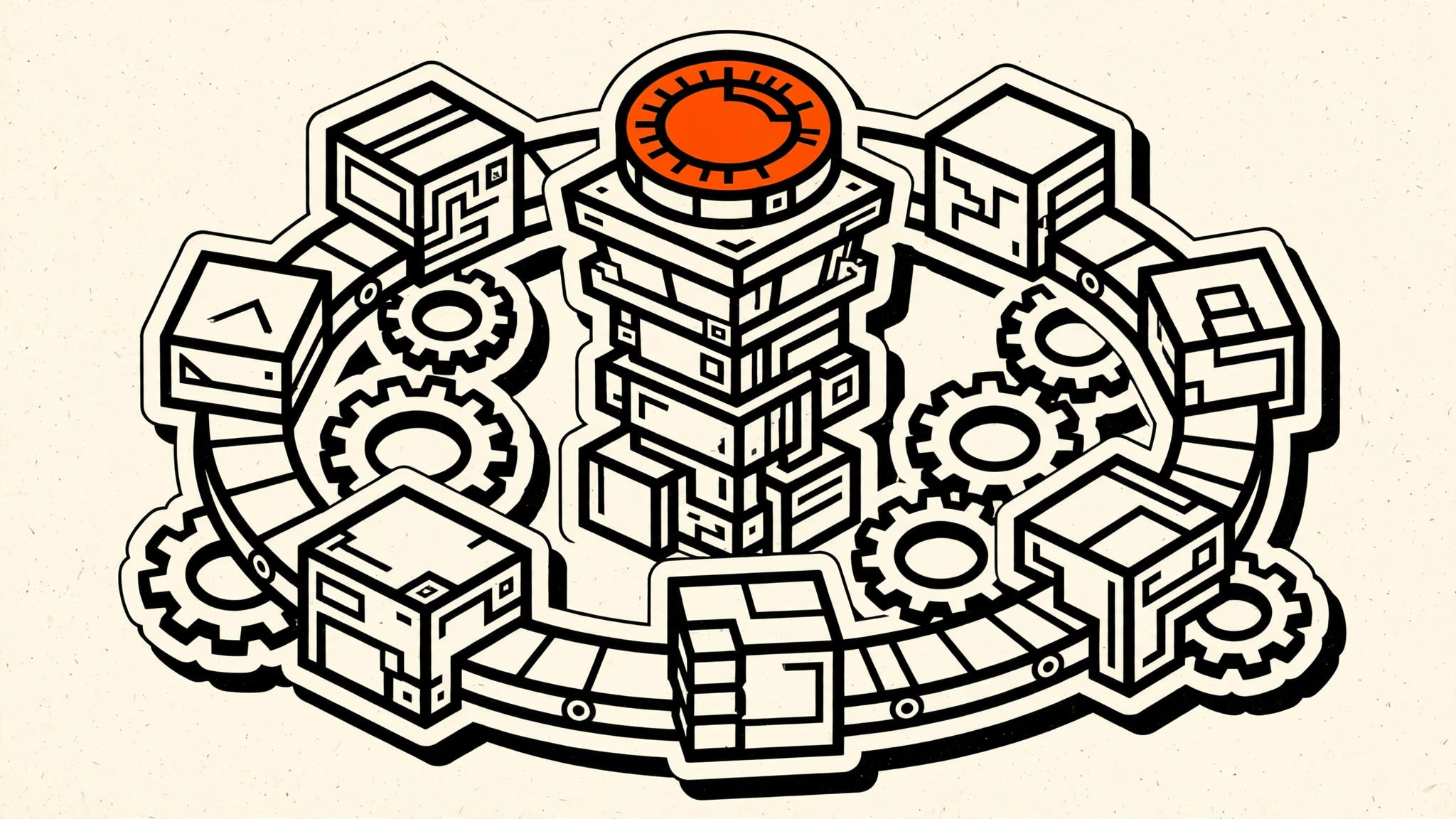
Enterprise AI has an execution gap, and this week one of the biggest enterprise software companies admitted it on stage. On October 6, 2026, at World Forum Mumbai, ServiceNow announced AI Workflow Factory — a product that links process mining, autonomous coding agents, app hosting, and a governance control tower into one loop for finding, building, running, and governing workflow improvements. The subtext matters more than the product: the AI race’s next phase isn’t about smarter agents, it’s about which agents survive contact with production governance.
In this post: what AI Workflow Factory actually contains, why the “execution gap” framing is the industry’s honest confession, and the parts of the playbook you can steal for your own n8n stacks — without buying anything from ServiceNow.
The execution gap is the whole story
Here’s the number that explains this launch. Atlassian’s latest AI report found that 85% of knowledge workers use AI, but only 6% of executives can point to clear, organization-wide ROI. That ratio — near-universal experimentation, near-zero proven return — is the execution gap: pilots that demo beautifully and die in governance, security review, or plain operational mess.
ServiceNow’s framing is a tacit admission that selling AI features wasn’t enough. The company cites 119% year-over-year growth in enterprise AI investment in India from its 2026 Enterprise AI Maturity Index, and claims more than 100 billion workflows run on its platform each year. The pitch: all that AI investment needs a factory that turns experiments into governed, measurable production workflows — not another agent you can demo in a keynote.
What AI Workflow Factory actually contains
“Factory” is packaging, but the components are real and the loop between them is the interesting part:
- Process Mining finds which processes should change, tied to KPIs the business actually measures. ServiceNow’s example: an organization targeting a 20% increase in case deflection, with mining surfacing where deflection opportunities exist.
- Autonomous Engineer and Build Agent turn those opportunities into workflow improvements. Autonomous Engineer is the agentic coding side — unattended planning, building, and testing of implementation work. Build Agent adds quality control to the loop.
- App Engine runs the improved workflows at scale. This is the boring part that kills most agent projects: reliable hosting with operational guarantees.
- AI Control Tower governs workflows, decisions, and agent actions throughout the loop. Every action the loop takes is tracked, audited, and reversible — the part enterprises actually buy.
- Action Fabric extends the same governed loop to third-party AI agents and tools, so agents built outside ServiceNow can plug into its governance layer.
 The governance layer — audited, tracked, reversible actions — is what enterprises are actually buying. The agent is the demo; the control tower is the product.
Availability, as of the announcement: AI Workflow Factory is generally available globally now; Autonomous Engineer is in Early Access on request. Accenture and Infosys are adopting the new capabilities — Infosys is integrating them with its Topaz and Cobalt platforms. No pricing was disclosed in the announcement coverage, which for ServiceNow means “call your account team.”
Why this matters if you build with n8n
You are not buying ServiceNow. But the architecture of this loop is a free lesson in what production agent systems need — and a checklist you can assemble from parts you already have:
The loop is find → build → run → govern. Indie agent builders obsess over the “build” step (the agent, the prompt, the model) and improvise the other three. The execution gap lives in the other three. Map it to an n8n stack: “find” is your ticket queue, chat logs, or the process your client complains about weekly; “build” is your agent node plus a review step; “run” is n8n’s queue mode with Redis-backed workers; “govern” is human-in-the-loop approvals and an execution audit trail.
Governance is the moat, not the model. Every enterprise announcement in October 2026 — this one, the AI Agent Accountability Act debate, PriceLabs’ approval-gated agents — points the same direction: the scarce resource is trustworthy action, not intelligence. If you’re selling automation to businesses, “who approved this and where’s the audit log” now belongs in your pitch before “which model it uses.”
Action Fabric is the opening for third-party builders. The most interesting component for our audience: ServiceNow explicitly wants third-party agents and tools inside its governed loop. Enterprises that standardize on this will need agents that can live under someone else’s control tower — approval-gated, auditable, idempotent. If you build n8n workflows for enterprise clients, designing for external governance from day one (named approvers, logged tool calls, no silent side effects) just became a competitive advantage.
 Process mining starts with the KPIs the business measures — find the workflow the team complains about weekly before you automate anything.
The honest limits
This is a vendor announcement, and the style guide demands receipts where a launch has adjectives:
- “Factory” mostly packages existing ServiceNow capabilities (Process Mining, App Engine, and its agent products predate this announcement) into one story. The new pieces are Autonomous Engineer and the explicit loop between components.
- Autonomous Engineer is Early Access, so the “unattended coding” claim is untested at scale by definition. Early-access agent coders have a known failure mode: they ship code that passes their own tests and fails your production ones.
- The 119% India AI investment growth and 100B workflows figures are ServiceNow’s own numbers, from its own index. Directionally plausible, precisely unverifiable.
- No pricing, no architecture docs, no migration story were in the announcement coverage. For a platform play, the integration tax is the real price — and it wasn’t mentioned.
FAQ
What is ServiceNow AI Workflow Factory?
A product suite announced October 6, 2026 that connects Process Mining, Autonomous Engineer, Build Agent, App Engine, AI Control Tower, and Action Fabric into one loop: identify workflow improvements, build them with AI assistance, run them at scale, and govern every action. It’s generally available globally now.
What is the AI execution gap?
The distance between AI experimentation (85% of knowledge workers use AI, per Atlassian) and proven organization-wide ROI (only 6% of executives can show it). Agents that work in demos but can’t pass governance, security, or reliability review never close it.
Can I build something similar with n8n?
The loop, yes: use your own process data to find targets, build with n8n AI Agent nodes, run in queue mode for reliability, and add human-in-the-loop approval nodes plus execution logging for governance. What you can’t cheaply replicate is the enterprise compliance surface — SOC 2 reports, vendor security reviews, and contractual liability. That’s what ServiceNow is actually selling.
Key Takeaways
- The execution gap is now the industry’s official problem statement — the 85%/6% experimentation-to-ROI ratio is the number behind every enterprise agent launch this quarter.
- Production agent systems are loops, not agents — find, build, run, govern. Audit your own stack against those four steps; the gap is almost never in “build.”
- Governance is the product — audit trails, approvals, and reversibility are what enterprises pay for. Build them into client workflows from day one.
- Action Fabric opens a door for third-party builders — design your n8n workflows to be approval-gated and auditable, and they can live inside someone else’s control tower.
Next: if you’re selling automation to businesses, add a one-page “governance” section to your next proposal — who approves what, what’s logged, what rolls back. It’s the cheapest differentiator in the market right now, and this launch just proved the buyers are asking for it.
Images: Pexels